

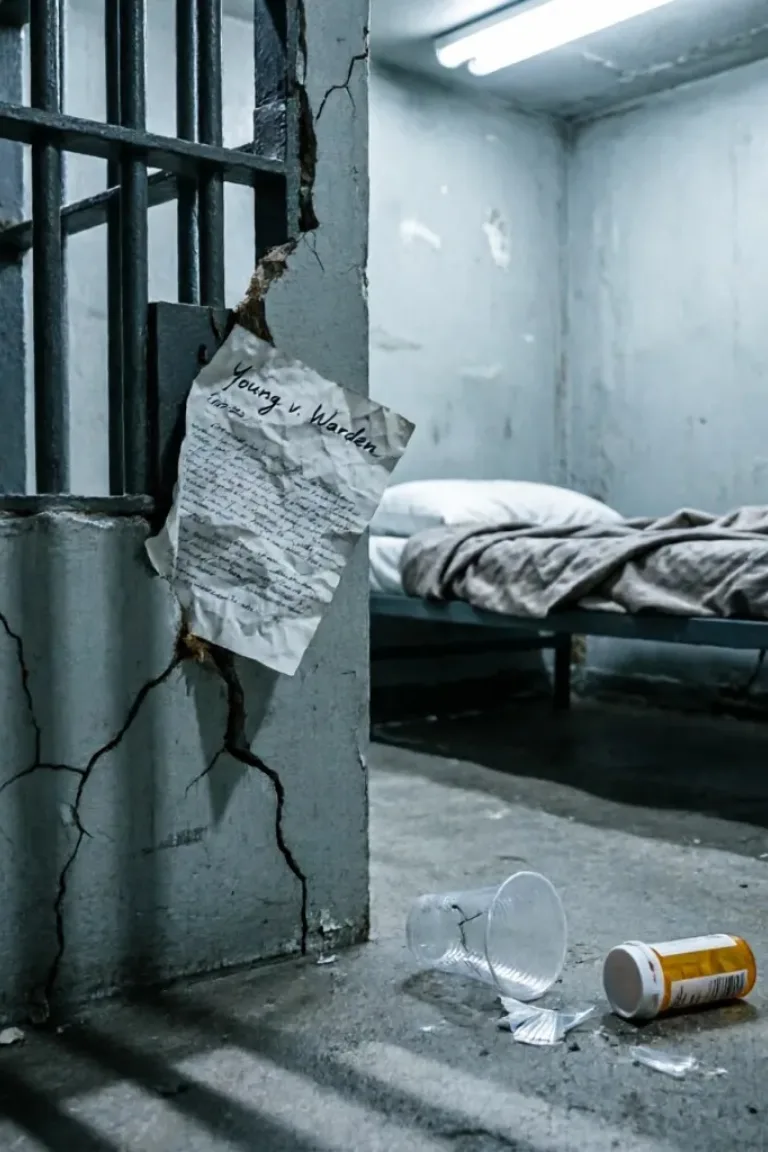
Case Summary
On December 8, 2025, the U.S. District Court for the Northern District of Florida issued a pivotal ruling in Young v. Warden. Petitioner James Young, an inmate at FCI Tallahassee with a documented history of severe depression and suicide attempts, sued Warden Michael D. Carvajal under Bivens and the Eighth Amendment. Young alleged that despite repeated requests and acute psychiatric episodes, prison officials failed to provide him with a mental health transfer or consistent, adequate care. He argued that the warden's systemic indifference to the facility's understaffed mental health unit created a substantial risk of serious harm, ultimately leading to a near-fatal self-harm incident. The warden moved to dismiss, asserting qualified immunity and failure to exhaust administrative remedies under the Prison Litigation Reform Act. The court denied the motion in part, holding that Young's detailed sick-call requests and verbal pleas to unit counselors constituted sufficient exhaustion, and that the alleged prolonged denial of care stated a viable deliberate-indifference claim.
Status or Result:
The district court denied the warden's motion to dismiss, allowing the deliberate indifference claim to proceed to discovery. The court found that Young's repeated oral and written complaints to mental health staff put the warden on constructive notice, making administrative exhaustion satisfied and precluding qualified immunity at the pleading stage.
Key Disputes
The central dispute was whether a prison warden could be held liable for systemic mental health deficiencies under the Eighth Amendment when the inmate had not completed every formal grievance step, and whether the alleged failure to act on known suicide risks crossed the threshold from negligence into deliberate indifference.
Social Impact
The ruling was widely cited by prison reform advocates as a crucial precedent for holding senior correctional officials accountable for institutional failures in mental health care. It highlighted the procedural barriers faced by vulnerable inmates under the PLRA and reinvigorated debate over mandatory minimum staffing standards for prison psychologists, prompting legislative proposals in three states to enhance oversight of inmate mental health services.
Adapted Novels (1)
Feedback & Corrections

No comments yet. Be the first to comment!