

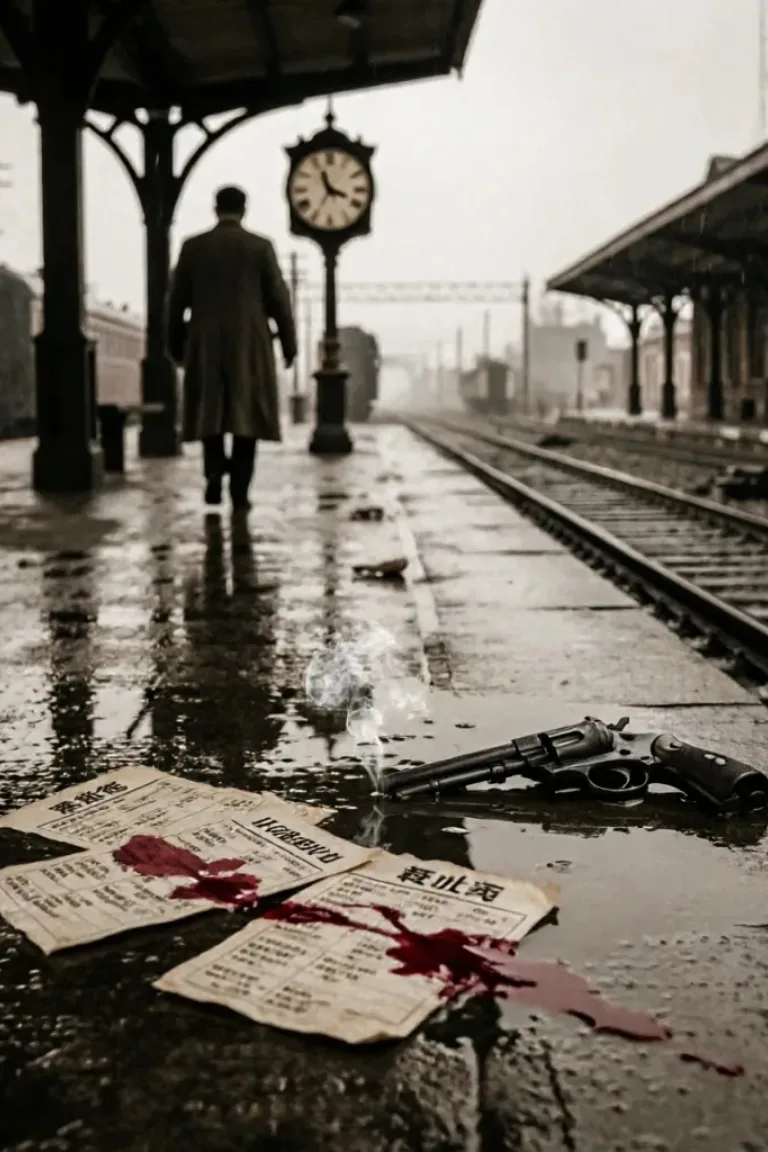
Case Summary
On March 20, 1913, Song Jiaoren, the young and charismatic acting chairman of the Kuomintang, was shot at Shanghai Railway Station. Having led the KMT to a decisive victory in China's first parliamentary elections, he was set to become prime minister and implement a cabinet system that would curtail President Yuan Shikai's power. He succumbed to his wounds two days later. The gunman, Wu Shiying, was caught immediately and named Ying Guixin, a Shanghai underworld figure with ties to the political elite. A raid on Ying's residence exposed incriminating telegrams between Ying, Hong Shuzu (a cabinet secretary), and Premier Zhao Bingjun, using code words like "destroy Song." The evidence pointed to a conspiracy orchestrated by Yuan Shikai himself. Amid national outrage, the case never received a fair trial. Wu Shiying died in custody under suspicious circumstances, Ying Guixin was assassinated en route to trial, and Zhao Bingjun died suddenly, likely poisoned. Hong Shuzu was the sole perpetrator brought to justice—he was arrested years later and executed in 1919. The assassination discredited the fledgling republic, directly triggering the failed Second Revolution and accelerating China's descent into warlordism and authoritarian rule. It marked the tragic end of parliamentary democracy in early 20th-century China.
Status or Result:
Wu Shiying died in prison before sentencing. Ying Guixin was murdered while being transferred. Premier Zhao Bingjun died suddenly under suspicious circumstances. Hong Shuzu was the only person tried and convicted; he was executed by hanging in 1919. No one else was formally held accountable, and Yuan Shikai was never brought to trial.
Key Disputes
The central dispute was whether President Yuan Shikai directly ordered the assassination. Despite strong circumstantial evidence from the telegrams, Yuan denied involvement, and the suspicious deaths of key witnesses prevented a conclusive legal determination. The integrity of the investigation was compromised by political interference, leaving the question of ultimate responsibility unresolved and fueling partisan conflict.
Social Impact
The assassination destroyed public trust in the republican government and directly triggered the "Second Revolution" against Yuan Shikai. It led to the suppression of the KMT, the dissolution of parliament, and Yuan's eventual monarchical attempt. The event marked the collapse of China's first democratic experiment and ushered in decades of warlord fragmentation and authoritarian rule.
Adapted Novels (1)
Feedback & Corrections

No comments yet. Be the first to comment!